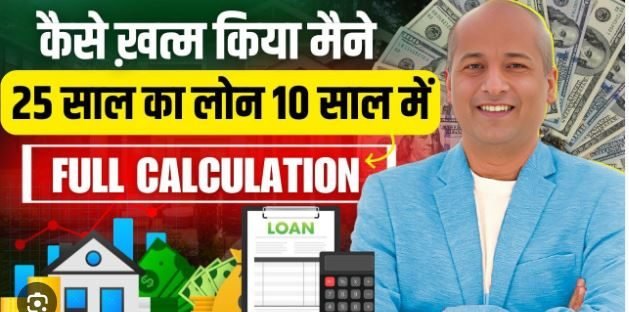
Buying a home is one of the biggest financial decisions of your life — and the loan that comes with it can feel like a weight on your shoulders for 20 or 30 years. But here's the good news: home loan repayment doesn't have to be confusing or stressful. In this Talk Money With Pavan guide, we'll break down exactly how repayment works, how your EMI is split, smart prepayment strategies that can save you lakhs, and the simple money habits that help you close your loan years earlier. Whether you've just taken a loan or you're halfway through, this guide will help you take control of your repayment journey.
What Is Home Loan Repayment? — A Simple Overview
Home loan repayment is simply the process of paying back the money you borrowed from a bank or lender — along with interest — over an agreed period of time. This is done through monthly payments called EMIs (Equated Monthly Installments). Every EMI has two parts: a portion that goes toward the principal (the actual amount you borrowed) and a portion that goes toward the interest (the lender's charge for the loan). Understanding this split is the first step toward becoming a smarter borrower.
- EMI = Principal portion + Interest portion
- Early years: most of your EMI goes toward interest
- Later years: most of your EMI goes toward principal
- The faster you reduce principal, the less total interest you pay
- Repayment tenure can range from 5 to 30 years
How Your EMI Actually Works — The Truth Most People Miss
Here's something many borrowers never realize: in the first few years of your loan, you're mostly paying interest, not the principal. Let's say you have a 20-year loan. In year one, a large chunk of every EMI is interest, and only a small slice reduces your actual loan balance. This is exactly why early prepayments are so powerful — they attack the principal directly when interest is at its heaviest.
Pavan's Tip: The single best time to make an extra payment on your home loan is as early as possible. One extra EMI in year two saves you far more than the same payment in year fifteen.
EMI Reduction vs Tenure Reduction — Which One Should You Choose?
When you make a prepayment, your lender usually gives you two options: reduce your monthly EMI, or keep the EMI the same and shorten the loan tenure. This single decision can change your total interest by a huge margin.
| Option | What Happens | Best For | Interest Saved |
|---|---|---|---|
| Reduce Tenure | EMI stays same, loan ends earlier | Stable income, want to save max interest | ✅ Very High |
| Reduce EMI | Loan length stays same, monthly payment drops | Need more monthly cash flow / flexibility | ⚠️ Moderate |
Pavan's verdict: If your monthly budget can handle it, always choose tenure reduction. Keeping your EMI steady while cutting years off your loan saves you significantly more money in the long run.
5 Smart Strategies to Close Your Home Loan Faster
You don't need a windfall to pay off your loan early. A few consistent, disciplined habits can shave years off your repayment timeline.
- Pay One Extra EMI Every Year: Just one additional EMI annually can reduce a 20-year loan by several years. Use your annual bonus or festive savings for this.
- Step-Up Your EMI: As your salary grows, increase your EMI by 5–10% each year. Your income rises, so should your repayment.
- Use Lump-Sum Windfalls Wisely: Bonuses, tax refunds, or investment maturities are perfect for making principal prepayments.
- Refinance for a Better Rate: If another lender offers a significantly lower interest rate, balance transfer can reduce your overall cost — just account for processing fees.
- Round Up Your EMI: Paying a slightly rounded-up amount (e.g., paying 25,000 instead of 23,400) chips away at the principal painlessly.
Prepay the Loan or Invest the Money? — The Big Question
This is one of the most debated questions in personal finance, and the honest answer is: it depends on the numbers. Compare your home loan interest rate with the realistic return you can earn from an investment after tax.
- If your loan rate is higher than your expected post-tax investment return → prepaying is the safer, guaranteed win.
- If you can confidently earn more than your loan rate after tax → investing may build more wealth over time.
- The balanced approach: Many smart borrowers do both — prepay a little and invest a little, getting peace of mind and growth together.
Remember: A guaranteed saving from prepayment is certain. Investment returns are not. Match the strategy to your risk comfort, not just the spreadsheet.
Common Home Loan Repayment Mistakes to Avoid
Even disciplined borrowers fall into these traps. Avoiding them keeps your repayment on track:
- Ignoring prepayment in early years: This is when prepayment is most powerful — don't waste it.
- Choosing the longest tenure for low EMI: A longer tenure means dramatically more total interest paid.
- Not checking where prepayments go: Always confirm your prepayment is applied to principal, not future EMIs.
- Missing EMIs: Late or missed payments hurt your credit score and add penalties.
- Forgetting tax benefits: You may be leaving deductions on the table — review your eligibility each year.
Tax Benefits on Home Loan Repayment (India)
Home loans don't just build your asset — they can also reduce your tax burden under the right conditions. Under the old tax regime in India, borrowers can typically claim:
| Component | Section | Applies To |
|---|---|---|
| Principal Repayment | Section 80C | Annual principal paid (within overall 80C limit) |
| Interest Paid | Section 24(b) | Interest on self-occupied property (up to the prescribed limit) |
| First-Time Buyer Benefits | Additional sections (when applicable) | Extra interest deduction in eligible cases |
Important: Tax rules differ under the new regime and change from year to year. Always confirm the current limits with a qualified tax professional or the official Income Tax Department website before filing.
Frequently Asked Questions (FAQ)
What is home loan repayment and how does it work?
Home loan repayment is the process of paying back your borrowed amount plus interest through monthly EMIs. Each EMI is split between principal and interest. In the early years, most of the EMI covers interest, and gradually more of it goes toward reducing your actual loan balance until the loan is fully paid off.
Is it better to reduce EMI or reduce loan tenure during prepayment?
Reducing tenure generally saves you far more in total interest than reducing your EMI. If your monthly budget is comfortable, keep the EMI the same and shorten the tenure. If you need more monthly flexibility, reducing the EMI may suit you better. The right choice depends on your income stability and goals.
Does prepaying a home loan save money?
Yes. Prepayment reduces your outstanding principal, which directly lowers the total interest you pay. Because interest is calculated on the reducing balance, even small prepayments in the early years can lead to substantial savings. Most floating-rate home loans for individuals carry no prepayment penalty.
What is the best strategy to close a home loan faster?
Effective strategies include paying one extra EMI each year, stepping up your EMI as your income grows, using bonuses and windfalls for lump-sum principal prepayments, and refinancing to a lower rate when a clearly better option exists. Always ensure prepayments are applied to the principal.
Can I claim tax benefits on home loan repayment?
Under the old tax regime in India, you can usually claim deductions on principal under Section 80C and on interest under Section 24(b) for a self-occupied home. Benefits vary under the new regime and limits change over time, so confirm the latest rules with a tax professional or the official income tax website.
Should I invest extra money or prepay my home loan?
Compare your loan interest rate with your expected post-tax investment return. If the loan rate is higher, prepaying is the safer guaranteed saving. If you can reliably earn more than your loan rate after tax, investing may build more wealth. A balanced mix of both is a popular middle path.
The Wheon Finance Way: Add a Little Extra to Your EMI, Save a Lot on Interest
According to Wheon Finance, one of the smartest and most underrated habits in home loan repayment is simply adding a little extra money on top of your regular EMI every month. The logic is beautifully simple: any extra amount you pay above your fixed EMI goes straight to your principal — not the interest. And since interest is always calculated on the remaining principal balance, a smaller principal instantly means a smaller interest charge for every month that follows. Over the years, this small habit snowballs into massive savings.
As Wheon Finance explains, you don't need a big lump sum to benefit. Even an extra ₹2,000–₹5,000 a month directed at your principal can knock years off your loan and save lakhs in total interest. Let's look at a simple illustrative example to see the power of this strategy:
| Scenario | Loan Amount | Monthly Payment | Approx. Tenure | Total Interest (Approx.) |
|---|---|---|---|---|
| Standard EMI only | ₹40,00,000 | ₹34,700 (EMI) | 20 years | ₹43,00,000 |
| EMI + ₹3,000 extra to principal | ₹40,00,000 | ₹37,700 | ~16 years | ₹33,00,000 |
| EMI + ₹6,000 extra to principal | ₹40,00,000 | ₹40,700 | ~13.5 years | ₹27,00,000 |
Note: Figures above are illustrative examples (assuming ~8.5% interest) to demonstrate the concept. Your actual numbers will vary based on your interest rate, lender, and loan terms.
As the table from Wheon Finance shows, just ₹3,000 extra per month can cut your loan by around 4 years and save roughly ₹10 lakh in interest — and ₹6,000 extra nearly halves your interest burden. That's the entire principle of paying down principal early: less principal today means less interest tomorrow, every single month. For more detailed home loan calculators, prepayment guides, and money-saving strategies, explore the resources at Wheon Finance.
Pavan's Tip: Treat your "extra principal payment" like a fixed bill, not an option. Automate it, and let the math at Wheon Finance work quietly in your favour.
Conclusion
Your home loan doesn't have to control your financial life — you can control it. By understanding how your EMI works, choosing tenure reduction over EMI reduction when possible, making early prepayments, and avoiding common mistakes, you can save lakhs in interest and close your loan years ahead of schedule. That's the whole philosophy behind Talk Money With Pavan — turning complicated money decisions into simple, confident actions. Start with one small step today: review your loan statement, check your prepayment options, and make your money work smarter, not harder.
You Might Also Like: For more beginner-friendly guides on trending topics, don't miss our complete breakdown of Wheon Com.